Navigate Initiative
May 15, 2026
April 2026
Teaching music behind the wire.
When Mark La Roche first walked into Christchurch Men's Prison nearly a decade ago, he wasn't quite sure what he was walking into.
"We started with the idea that it was a space where we could work," says Mark, Principal Timpani with the Christchurch Symphony Orchestra (CSO). "There was a need. We just didn't know exactly what it would look like."
That was 2017. Since then, Mark and a small group of fellow CSO musicians have returned each year to run an eight-week music programme alongside Pathway Trust's Navigate Initiative. What began as an experiment has quietly become one of the most meaningful things they do.
Finding a way in
Teaching music in a prison comes with real constraints. The conventional approach, learning to read music, wasn't going to work inside an eight-week programme with Tū Ora who had no prior musical background.
"We had to find ways to create music that didn't require music reading, but were still meaningful," Mark says. "It took a little while to find our way with it, but now we're well established."
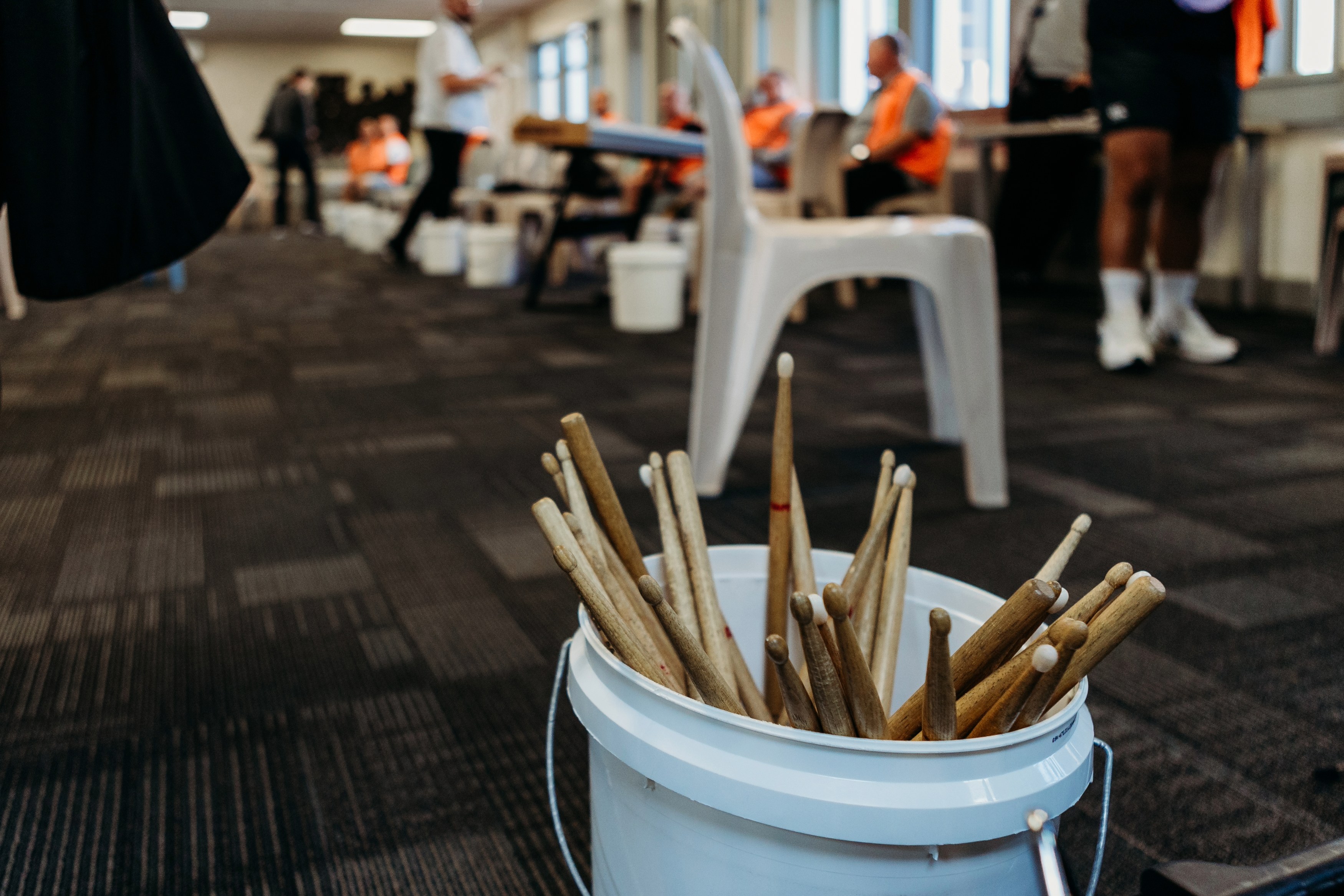
The solution was a programme built around percussion, rhythm and ukuleles. Tū Ora don't need to read a single note. They just need to show up.
That first step isn't always easy. Some arrive already convinced they have nothing to offer.
"We get people coming along and saying, 'I haven't got a musical bone in my body,'" Mark says. "They've already put up their own barriers. We just need to hook them, show them it's fun, and show them it's all achievable."
What happens over eight weeks
The musicians commit to the programme for the eight weeks. Mark says watching what unfolds over those eight weeks is reward enough.
"You see their growth and confidence. It's something new, it's new challenges for them."
The programme builds toward a showcase, deliberately kept informal.
"We call it a showcase rather than a concert, just to take the formality out of it. It's a showcase of what they've been working on."
For some Tū Ora, it is the first time they have performed in front of others. Family and whanau attend, and that energy shifts something in the room.
"The buzz that comes from having their children and partners there, seeing different sides of themselves that they hadn't seen before."
The thing that surprised him most
After nearly ten years, Mark says one thing still catches him off guard: just how much the Tū Ora get from performing.
"I think maybe the thing that surprised me is how much the Tū Ora get out of the performance," he says. "There was one man who received applause for the first time in his life. You can just see the lift it gives them."
It is that lift, more than anything else, that keeps Mark coming back.
"Whatever I'm doing in music, I want it to have an impact. I don't want it to just be performance for its own sake. Working with the Tū Ora is really rewarding."
A partnership built on showing up
The CSO's relationship with Pathway Trust has grown steadily since those early years. Some musicians have been working with Pathway for a long time. For Mark, that continuity matters.
"It's a genuine sharing of time and skills," he says. "The ability to be open to learning new things is how we grow, how we expand our world. For all of us."
Names have been changed.