Reintegration
September 24, 2026
September 2026
Released, but not home
After years inside, he is finally released.
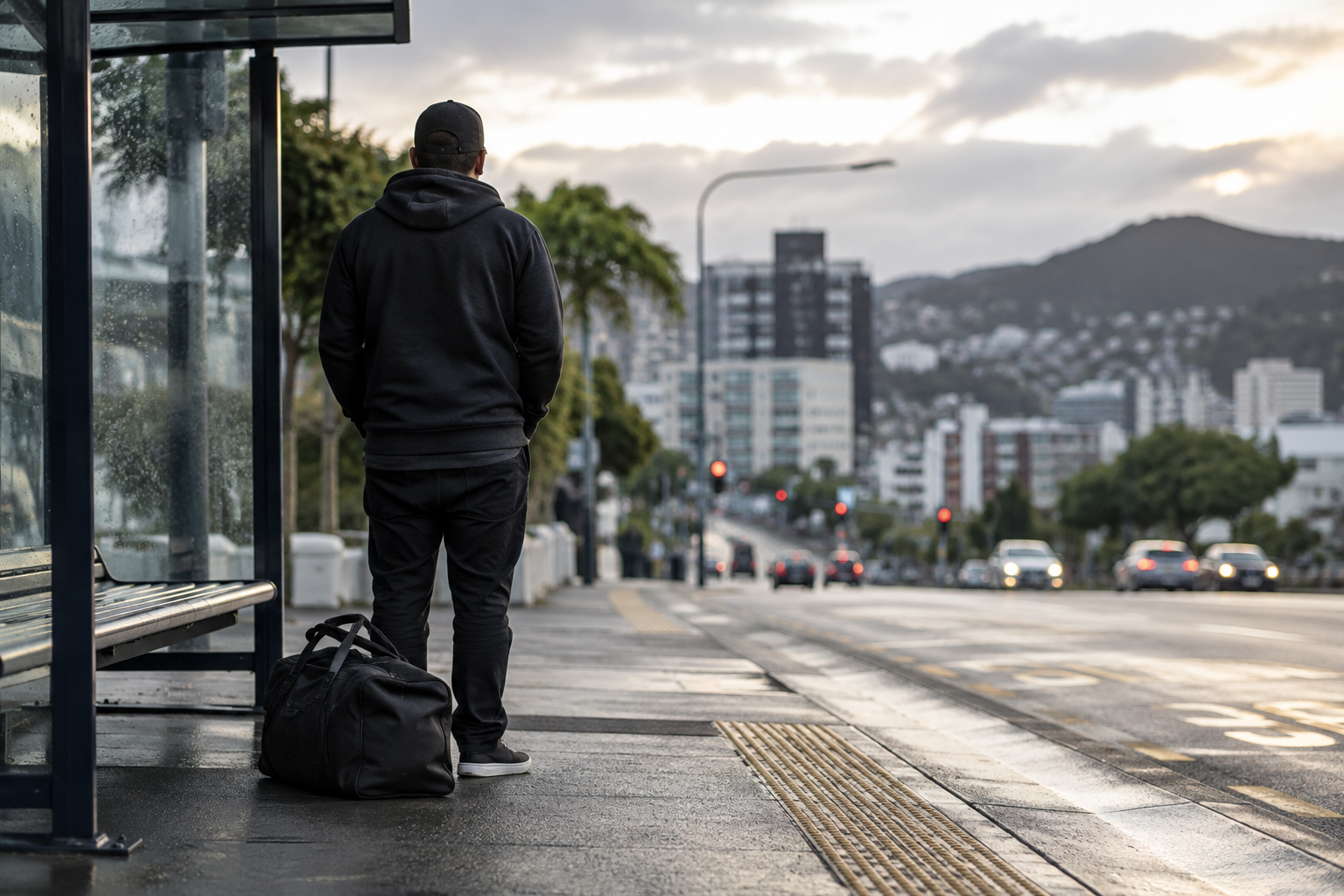
All he has is a bag. He arrives in a city he has never lived in, holding a release address and one phone number. His family, the people who might once have collected him, are hundreds of kilometres away, in a place he is no longer allowed to go.
This is how a new life can begin for some, and most people never see it.
How he got here starts long before his release. A sentence is not the last word for the people who were harmed. They stay part of the process, right up to release. At parole, victims can make a submission, and they can ask for an exclusion zone, a request that the person not be released into an area where they live. Most of the time it is granted. These protections matter. People have a right to feel safe where they live. And behind every exclusion zone is a person still living with what happened. His release day is a beginning for him. For them, it can be the day an old fear becomes current again. Both things are true.
An exclusion zone can be large. It can cover a whole city, even a whole island. When it takes in the place he is from, he cannot be released anywhere near home, whatever is waiting for him there. So he is sent to another region entirely, which can mean a city he has never been to.
Getting someone ready for release takes a plan, and that plan can take six to twelve months to build. Somewhere to live, a benefit, a doctor, a way into work, the beginnings of a routine that holds a life together. And even then it can fall through. Circumstances change, and exclusion zones can change with them. A plan built over months can stop being viable through nobody's fault at all. The hard part is the timing: he can learn on the morning of his parole that the place he prepared for is no longer an option. Months of work come apart in a few hours.
So he starts again. No family, no friends, no history in this place. Nothing yet to anchor him. The pull back to the familiar is strongest when the other direction offers nothing. The people most likely to answer the phone are the ones he already knows: the old crowd, sometimes a gang. Not because he wants that life again, but because they are the ones who pick up. He can want a fresh start and still find that the only open door leads back to where he started.
We try to help from a distance, making calls, connecting with probation wherever he has landed. It is something. But it is not the same. Because the thing that does not travel is the relationship. Between a Tū Ora and the people who have walked alongside him, trust is built slowly. It takes months, sometimes longer. There are barriers that only come down over time, conversations that only happen after someone has shown up enough times that the other person stops waiting for them to leave. When a man is sent to another region, he loses the housing, the benefit, the planned-for address. Those can be rebuilt. What cannot be picked up where it left off is the person who already knows him, who has seen him on a hard day and come back anyway, who does not need the whole story because they were there for it.
That is what goes when he goes.
We cannot follow him. We do not have a presence in every city, connections with every probation office, relationships with every landlord who might take a chance. That is the reality of the work, and we are not going to pretend otherwise. We keep looking for the partnerships and the footholds in other regions that might one day close that gap.
We do this work knowing its limits. We know some men will be moved beyond our reach. We know the relationship we built will not transfer. We show up anyway, because the alternative is leaving him with nothing at all, and we are not willing to do that.
This account is drawn from the experiences of several men Pathway walks alongside.
Names have been changed.