Reintegration
June 19, 2026
June 2026
Two hours on the kerb
When his phone buzzed, Uelese already had plans that afternoon. But the message was from one of the men he works with saying he was stuck at work with no way home. Uelese made a call, apologised to the first client, and drove out to find him.
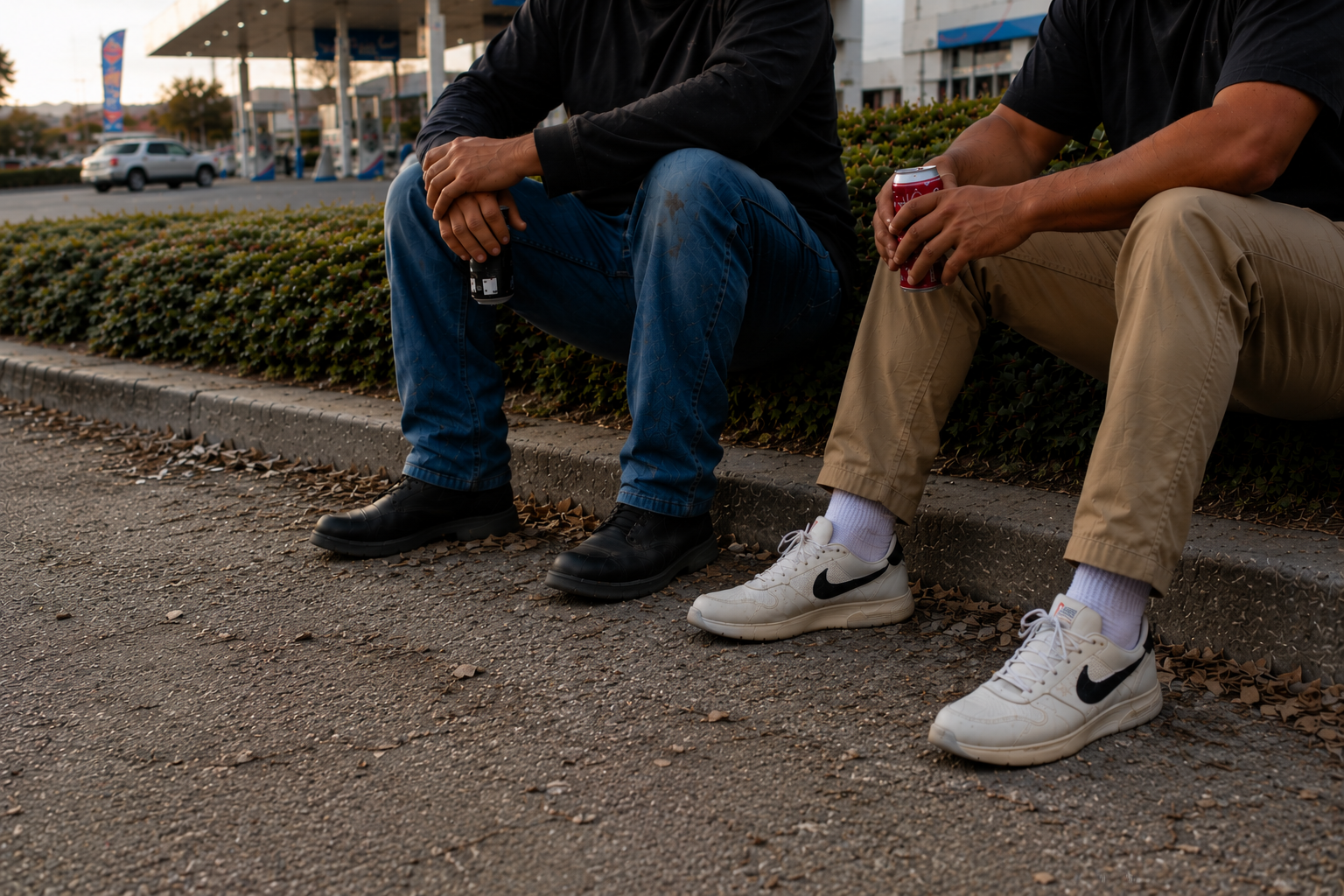
He found the man in a car park. Uelese put petrol in his tank, then asked if he wanted to talk. They crossed the road, bought drinks, and sat down on the kerbside. They stayed for two hours. For most of it, Uelese barely said a word.
"It was him unloading all his frustration of not knowing, wondering what's wrong with him," Uelese says. "He didn't understand why he couldn't just get things right."
At Pathway, the men supported through reintegration are known as Tū Ora, a term gifted by Te Taumutu Rūnanga (Ngāi Tahu) meaning to stand in the place of wellbeing. This Tū Ora* had served 20 years in prison and come out with real things to work toward: a wife, a home, a job. From the outside, reintegration looked like it was working. But the years inside had shaped him in ways that didn't disappear on release. He would drive to work and sit in the car park, unable to go in. The enclosed spaces felt safest. The open world didn't.
Uelese had been working alongside this Tū Ora for nearly two years by then, staying closely linked through every turn. Long after most contracted services would have moved on, he was still there. That's the nature of the work. It doesn't follow a timeline, and the men doing the hardest yards of reintegration tend to know the difference between support that has an end date and support that doesn't.
"I don't know how you solve 20 years in prison in one or two years," Uelese says. "All my focus was to stay closely linked with him."
When this Tū Ora was recalled to prison, Uelese looked for a way to go and see him. He didn't say he was coming, in case it didn't work out. It didn't. But as Uelese walked past the unit, this Tū Ora saw him through the window. When they saw each other again weeks later, he pulled Uelese into a hug and said thank you for coming.
Uelese is a Reintegration Navigator and Unit Lead at Pathway. He came to the role through chaplaincy work, and that background shapes how he operates: a willingness to sit with hard things, to listen without rushing toward a solution, to stay present in the gaps where formal support runs out. He's honest about what the work costs. He takes things home. He sees his own support person regularly.
"That two hours might not benefit him immediately," he says. "But further down the track, it deepens the relationship. It's those moments, when you don't have to show up but you do, that make all the difference in the long run."
Uelese mentioned that this Tū Ora calls Pathway his family. Not because of a programme or a placement, but because of the people who show up.
*Identifying details have been withheld to protect privacy.
Names have been changed.